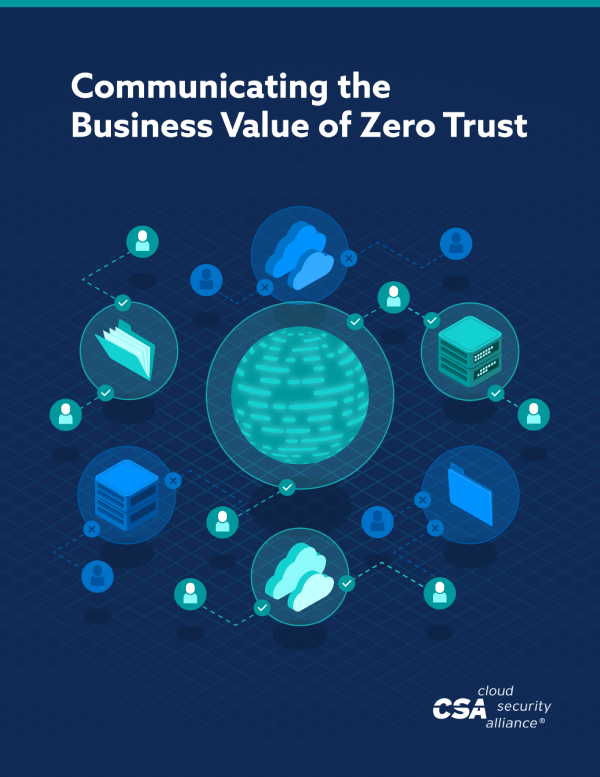
Communicating the Business Value of Zero Trust
Released: 12/18/2023

Zero Trust is a major industry trend that is being adopted and promoted by security teams around the globe, and for good reason - it delivers improved security, while also mitigating risks, facilitating regulatory compliance, maintaining business continuity, providing a competitive advantage, building trust and customer confidence, simplifying operations, generating cost savings, and enabling scalability and flexibility in managing cybersecurity risks.
However, Zero Trust is also an industry buzzword that is often misunderstood, especially by business leaders and non-security professionals that are key stakeholders in a Zero Trust initiative. These non-technical stakeholders can make the difference between a successful and failed initiative.
Therefore, this document seeks to provide InfoSec professionals with the knowledge and mindset to effectively communicate to non-technical internal stakeholders why their organization should invest in implementing a Zero Trust security strategy. By using one or more of the business values described in this document and applying them to the specifics of their organization, security leaders will be able to make a strong business case for adopting Zero Trust.
Key Takeaways:
- What is Zero Trust
- Misconceptions about Zero Trust
- What is business value
- Guiding principles for communicating business value
- 14 benefits of Zero Trust and how to best communicate them
Related CSA 2023 Zero Trust Summit panel session recording: Understanding, Communicating, and Delivering Business Value




Download this Resource
 Best For:
- InfoSec professionals
- Non-technical stakeholders